



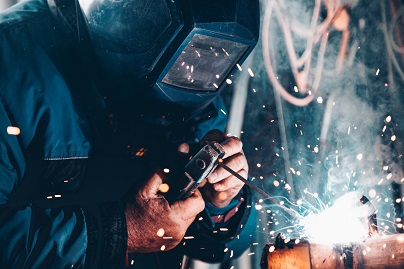
BUREAU VERITAS COMMENDS HSE RESTRICTIONS ON HAZARDOUS WELDING FUME
25/02/2019 Bureau Veritas
Bureau Veritas has applauded The Health and Safety Executive (HSE)'s action to increase awareness of the hazards posed by welding fume, following its recent safety alert enforcing greater restrictions and protection against exposure.The alert, which has reclassified the status of all welding fume as a Group 1 carcinogen -cancer-causing to humans - is for all working people and employers who undertake welding activities, including mild steel. It follows new scientific evidence from the International Agency for Research on Cancer linking exposure to lung cancer and potentially kidney cancer . As such, the HSE will be enforcing tighter controls around exposure to welding fume, with immediate effect.
Simon Hodge, Consultancy Group Manager at Bureau Veritas, comments: "Following this reclassification there is no known level of safe exposure to welding fume and businesses can expect greater scrutiny regarding the effectiveness of engineering controls. As of now, current control methods such as general ventilation, will not be deemed acceptable. It also means that where controls are not adequate or not present - for example outside - that appropriate and effective respiratory protective equipment (RPE) is provided and used. This will include training for workers to ensure compliance.
"The HSE will also expect organisations to have up-to-date and adequate risk assessments in place which reflect the increased risk posed by this update. All employers are therefore advised to review their COSHH risk assessments for welding activities and revise where necessary their control measures to protect those undertaking welding activities. This may include introducing workplace exposure monitoring to properly assess the risk. Non-compliance will not only pose a significant safety hazard to workers but will mean that businesses leave themselves open for severe repercussions from the HSE."
Welding activities can generate various hazardous components including particles, gases and ultraviolet (UV) radiation; all of which present health risks. As well as welding fume being recognised as cancer-causing, other health effects of exposure have long been known to include metal fume fever, serious lung conditions and neurological effects linked to manganese, a chemical present in mild steel welding fume.
As a global health and safety and compliance expert, Bureau Veritas is ideally placed to provide a holistic support service to organisations undertaking welding activities. This includes assessment of welding qualifications, audit and assessment of welding processes, thorough examination and test of local exhaust ventilation (LEV) systems, measurement and monitoring of welding fume exposure, review and update of COSHH risk assessments and provision of advice on appropriate engineering controls.
For more information, please visit: www.bureauveritas.co.uk
 Print this article
Share article:
Process and Control Today are not responsible for the content of submitted or externally produced articles and images. Click here to email us about any errors or omissions contained within this article.