



Combined approach prevents contamination
07/10/2025 HRS Heat Exchangers Ltd
By Matt Hale, Global Key Account Director
 The safety of pharmaceuticals and toiletries depends on the management and control of a wide range of factors throughout the whole supply chain, from raw material and ingredient procurement, through processing and packaging, to storage, distribution and even post-purchase consumer behaviour. The use of HACCP (Hazard Analysis and Critical Control Point) analysis facilitates this approach, but it is also important that, where necessary, equipment is designed and manufactured to prevent possible contamination, for example between products and service fluids.
There are three main elements to preventing contamination occurring in tubular heat exchangers: system design, production quality, and system maintenance.
System design
In terms of design there are two main methods to prevent cross contamination between the product and the service medium (heating or cooling) due to leakage in tubular heat exchangers. The first is to maintain a positive pressure difference between the product and the service fluid, so that should a leak occur, the product will always flow into the service fluid rather than vice-versa. However, in order to be successful this pressure differential must be maintained at all times, and appropriate sensors and monitoring systems must be included in the heat exchanger. It also adds a further level of complication when designing the operating pressures for the equipment.
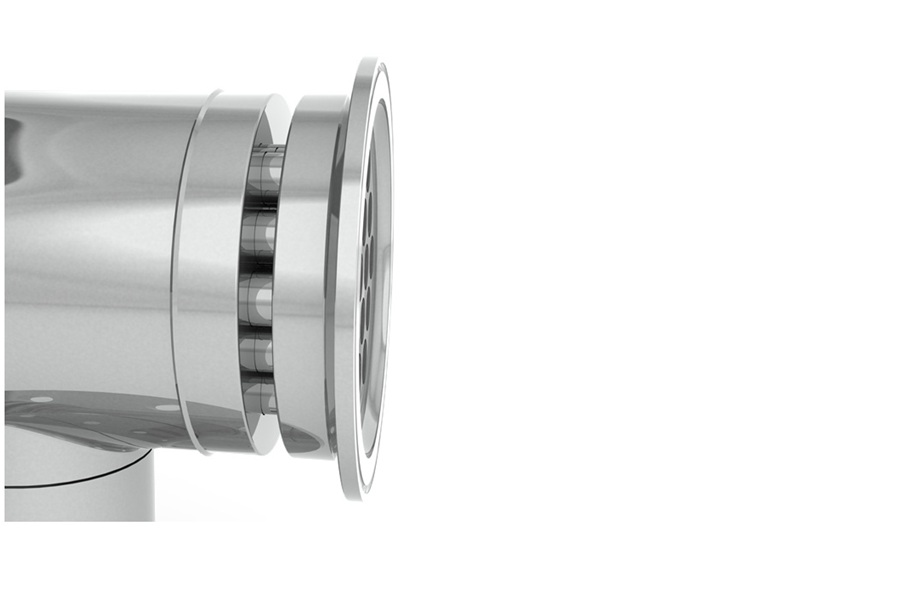
The second option is to introduce a physical separation between two different tube plates: one for the product and one for the service fluid. This means that in the event of a leak from either the service fluid or the product, the material flows into a safety container or other vessel and no mixing of the two materials is possible. Because this option relies on a physical barrier, no additional systems are required, making construction, operation and maintenance of the heat exchanger much simpler. For this reason, HRS Heat Exchangers use the double tube plate system in pharmaceutical production situations where contamination needs to be prevented, and double tube plates are included as standard with our S Series models of multitube heat exchangers (including the SP Series specifically for pharmaceuticals and fine chemicals).
The gap between the two tube plates will depend on a number of factors, including the pharmaceutical products being processed and the space available for the installation, but can be effective even when the distance is just 3mm. Depending on the materials being used and the type of situation that the heat exchanger is used in, the gap between the two plates may be shrouded (with appropriate drain or inspection ports) or open.
As well as designing for hygiene and to prevent contamination, it is also important to ensure effective heat transfer and high levels of operational and energy efficiency. That’s why HRS uses a corrugated tube design rather than the smooth tubes.
Corrugated tubes create turbulent flow in the product, preventing viscous or suspended materials (like thick creams and gels) sticking to the wall of the tube, where they can form a boundary layer and prevent efficient heat transfer. This improved energy efficiency means that corrugated tubes provide greater levels of heat transfer than smooth tubes of the same length, which also means that corrugated tube heat exchangers can be up to half the size of their smooth tube equivalents. The turbulence created in the tube also reduces cleaning frequency and simplifies maintenance compared to other heat exchanger designs.
Heat exchanger construction
Not only is the quality of materials important (such as the use of stainless steel), but so too is the quality of construction. Welding needs to be precise and joints (whether rolled or welded) need to be smooth to prevent product fouling or lodging of product, while also being strong enough to maintain integrity under pressure. Most manufacturers will be happy to arrange for you to see their production facilities and to provide information on their fabrication processes and standards if required.
The type of heat exchanger and its design capacity will determine the number of tubes. At some point during the design process, the tubes will need to be supported and attached to the body of the heat exchanger – usually at the ends. The tube plate (sometimes known as the tube sheet) not only supports the tubes but also provides a barrier between the product and service fluid, so it has to be robust.
The importance of cleanliness
It is obviously important to regularly clean, inspect and maintain heat exchange equipment in line with the manufacturer’s recommendations. For example, if handling acidic or abrasive materials (such as skin scrub products) more frequent inspection and cleaning may be required. Regular cleaning will ensure that drain holes etc. operate correctly in the event of a leak, while maintenance and cleaning will reduce the risk of leaks occurring and provide an opportunity for any repairs.
The use of effective Cleaning-in-Place (CIP) systems is a key element of this, and as well as being designed to prevent contamination via the double-tube plate, the HRS S Series also incorporate hygienic design and construction elements such as surface roughness, clean welding and the prevention of inaccessible areas or corners where dirt and/or cleaning chemicals may build up – meaning that CIP is as effective, timely and energy efficient as possible.
 Print this article
For more information, please contact:
HRS Heat Exchangers Ltd
HRS House
3 Abloy House
Hatters Lane
Watford
Hertfordshire
WD18 8AJ
Tel: +44 (0)1923 545 625
Email: info@uk.hrs-he.com
Web: https://www.hrs-heatexchangers.com

Process and Control Today are not responsible for the content of submitted or externally produced articles and images. Click here to email us about any errors or omissions contained within this article.