



Condition-Based Maintenance: Moving Beyond a Calendar with IIoT Wireless Sensors and Analysis Software
14/09/2022 Fluke Reliability Solutions
By John Bernet, a mechanical application and product specialist with Fluke Reliability
Plant maintenance is changing as wireless condition monitoring sensors give managers access to machine data and analysis insights from anywhere.
During the pandemic, organisations learned it is not always possible or practical to monitor plant assets in-person. As a result, organisations are increasingly adopting remote condition monitoring sensors. Recent advances in technology, both hardware and software, now allow teams to view machine health data and get actionable insights about asset conditions no matter where they are.
Using today’s high-speed connectivity technology, wireless condition monitoring sensors will monitor assets for specific attributes and use cloud-based maintenance software to send instant alarms when a machine’s condition changes or falls outside of specified thresholds. These alerts and dashboards give maintenance teams the ability to monitor machine health from an office, walking around a plant, or even while at home.
In many plants, the advent of wireless sensors has also reduced the need for maintenance technicians to make as many routes. In particular, with condition monitoring sensors placed in potentially hazardous or hard-to-reach places in a plant, it can improve safety by reducing the need to regularly send maintenance personnel. Automating data collection where possible does not replace maintenance workers but instead allows them to optimise their efforts, leading to maximised asset life and measurable wins that help boost the bottom line.
It can also help alleviate the strain caused by workforce shortages seen in recent years.
Incorporating Wireless Sensors into a Condition-Based Maintenance Program
Traditionally, maintenance is performed using a calendar, under the assumption that the older a machine gets, the more its performance decreases. However, this is not always the case. Calendar-based maintenance is often inefficient and does not maximise an asset’s lifespan.
Conversely, condition-based maintenance is a practice that relies on monitoring a machine’s condition to identify and plan maintenance actions in advance.
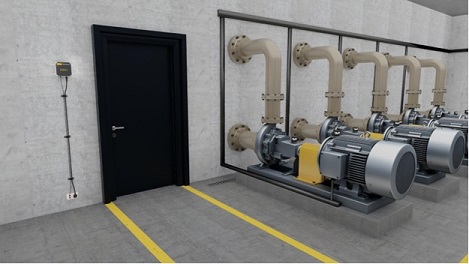 Wireless sensor technology has expanded the possibilities of condition-based maintenance. Affordable condition monitoring sensors and user-friendly analysis software have put this maintenance practice within reach for more organiations. Today, wireless sensors are capable of condition monitoring on a variety of assets in plants across many industries. A 2020 report by Mordor Intelligence suggests the condition monitoring equipment market is already valued at over 2 billion pounds, with expected annual growth of nearly six percent through 2026.
There are now a number of different types of condition monitoring sensors available. Vibration sensors are one of the most successful sensor types. A machine’s vibration can provide significant insight into a machine’s condition. By monitoring machine vibration, maintenance teams can determine when a machine displays excessive or abnormal vibration patterns. Abnormal vibration signals can be a sign of potential faults, cause premature wear in components, and eventually shorten asset life. Vibration monitoring lets teams identify potential faults early on and act quickly before the machine fails.
In a plant, it is particularly important to detect aberrations on critical machines, and to do so as early as possible. Depending on the asset’s criticality, maintenance teams can choose a sensor that monitors the machine continuously or one that monitors at regular intervals.
Additionally, by trending a machine’s vibration data over time, teams can gain insights into machine health and tailor their maintenance actions to maximize asset uptime and prevent unplanned downtime.
Some researchers and analysis experts have even begun using vibration data to attempt to calculate the remaining useful life of various assets, as recently discussed in a special condition monitoring issue of the journal Applied Sciences.
Advances in wireless sensor technology have expanded the possibilities of condition-based maintenance, and affordable sensors have put this maintenance practice within reach for more organisations.
Battery Advancements in Wireless Sensors
Wireless sensors require power to perform measurements and send data to the cloud. As such, they typically use batteries to operate.
The more data is being sent, the faster the battery is drained—so teams developing wireless sensors have been focused on finding ways to reduce the amount of data being sent and increase battery life. This requires smart management of data transfer.
For example, a wireless sensor can analyze a machine and send a quick snapshot of data before going back to sleep. This is a quick and effective way for technicians to monitor a device’s regular performance and can indicate if additional measurements are needed or further action should be taken. A short measurement can signal whether there is a need for more substantial and prolonged data collection.
Batteries in today’s sensors are typically longer lasting and smaller than the batteries in their predecessors. Innovation in batteries has led to batteries that are lighter, more powerful, and less expensive.
Moving Beyond Batteries: Harvesting Energy from Machinery
In some cases, it is possible to forgo a battery entirely and rely on scavenging energy from the vibration, heat, or light put out by a machine. This is an innovation known as energy harvesting, and a number of industry experts view it as an emerging solution to the issue of battery failures in condition monitoring sensors, according to research published in the journal Measurement in 2021.
Thermoelectric generator (TEG)-equipped sensors harvest energy from the heat that motors generate to operate without the limitations of a battery. Instead, it has a jumper wire that acts as its own gas pump — it gets fuel as needed, without the increase in size and weight that a battery would add.
Decreasing the size and weight of sensors by removing batteries also expands their versatility. Sensors equipped with batteries present two problems:
- Batteries make sensors larger, and the sensor’s footprint limits the number of locations where it can be placed.
- The frequency response of the sensor is affected by the additional weight of the battery, which can influence the resonance of the machine itself.
Every structure has a resonance — if it’s impacted, it could have significant effects on its performance. For certain sensitive machines, smaller sensors are ideal.
Stay Informed with Relevant, Actionable Data
Another aspect to consider is the type of vibration data needed. High-frequency spectral data is important, and a screening sensor that is linked to an energy harvester can only gather so much energy.
There comes a point where the type of data determines the size and energy needs of the sensor. Sensors equipped with harvesters might not be able to do the more intensive, detailed types of data gathering that require a great amount of energy. These sensors may work well for screening and have enough energy to do the quick vibration snapshots, but may not be the right choice when more detailed data is needed.
Larger sensors take full spectral data several times a day. Some sensors take screening data, which can detect whether a problem exists—but more advanced sensors take analysis data, which is much more extensive and looks at patterns to identify faults.
The type of data required for each asset is based on how critical it is to an organisation. Regardless of which type of vibration data is collected, it can be paired with other tools — such as oil analysis, thermography, or power monitoring — as part of a complete maintenance program.
Leveraging Condition-Based Maintenance Strategy with Vibration Analysis
Vibration analysis is simply using a machine’s vibration data to identify potential faults. It involves trending a machine’s vibration level and quantifying any deviations from the norm. Analysis by determining the nature of the problem and what caused the change. Part of vibration analysis is recognising patterns, but it takes extensive training and experience to be able to spot all the necessary patterns.
Analysis software can take the data wireless sensors have collected and generate insights, notify people who can generate work orders and more.
Once teams know what is causing a machine to experience abnormal or excessive vibration, they can determine the necessary steps and timeframe to repair it. This way, teams can extend asset performance and make the most of all their resources.
Wireless sensors are straightforward to set up and offer accurate and reliable data. They require minimal maintenance, thereby helping teams increase their efficiency, reduce their maintenance spending and increase asset life and uptime.
The plant of the future means machines can tell us what is wrong with them — and maintenance teams can work smarter, not harder, as a result.
As a mechanical application and product specialist with Fluke Reliability, John Bernet works with customers from all industries to successfully implement their reliability programs. He has more than 30 years of experience in the maintenance and operation of commercial machinery and as a nuclear power plant electrician in the U.S. Navy. He holds a Category II Vibration Analyst certification and is a Certified Maintenance Reliability Professional (CMRP).
 Print this article
For more information, please contact:
Fluke Europe B.V.
PO Box 1186
5602 BD
Eindhoven
The Netherlands
Tel: +49 8999616 420
Email: Sales@Accelix.com
Web: https://www.fluke.com/vibration
Share article:
Process and Control Today are not responsible for the content of submitted or externally produced articles and images. Click here to email us about any errors or omissions contained within this article.