



Effective steam conditioning supports reliability and resilience in a changing energy landscape, says Celeros Flow Technology
11/08/2026 Celeros Flow Technology
As governments and industry seek to strengthen energy security, operators are under growing pressure to deliver reliable performance while maximizing efficiency and asset life. This pressure is being intensified by increasing electrification, ageing infrastructure and growing electricity demand, as well as major trends such as AI infrastructure expansion, accelerating EV adoption and wider industrial decarbonization.
As a result, the range of technologies that generate electricity using steam as their mechanical transmission force is becoming increasingly diverse. From conventional and nuclear power stations to energy-from-waste facilities and industrial combined heat and power (CHP) plants, many of these technologies use steam to drive turbines that generate electricity.
According to Celeros Flow Technology (Celeros FT), selecting the correct desuperheater technology is a critical factor in achieving these objectives.
“The energy landscape is becoming more complex,” explains Pedro Flores-Castillo, Director of Product Management, Copes Vulcan at Celeros Flow Technology. “Plants are operating more flexibly, new generation technologies are coming on-stream, and many industrial operators are investing in on-site energy infrastructure to improve resilience and security of supply. While these facilities may have very different objectives, many of them depend on effective steam conditioning to operate efficiently and reliably.
Accurate steam temperature control remains essential for protecting downstream equipment and maintaining plant performance, which is why selecting the correct desuperheater technology for the application is such an important engineering decision.”
Beyond power generation, desuperheating technology also plays an important role in industrial facilities including refineries, petrochemical plants, district heating schemes, pulp and paper mills, chemical processing operations, and other steam-intensive manufacturing processes. In these environments, accurate steam temperature control supports process efficiency, equipment protection and operational reliability, while helping operators meet increasingly demanding production and sustainability targets.
Desuperheaters reduce steam temperature by introducing cooling water into the steam flow. However, steam pressure, load profile, turndown requirements, cooling water conditions and installation constraints can vary significantly between applications. As a result, no single desuperheater design is suitable for every operating environment.
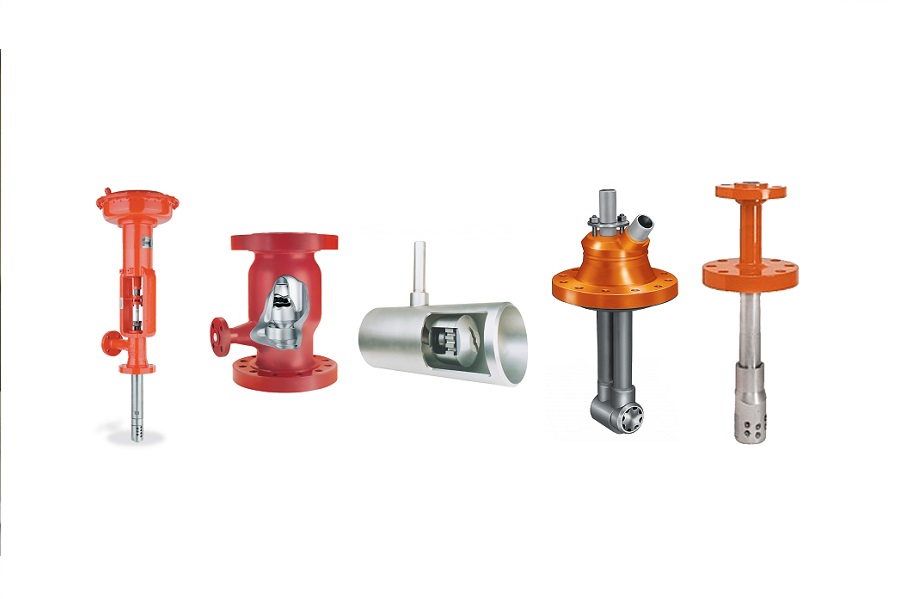
To address these differing requirements, Celeros FT offers a comprehensive portfolio of desuperheater technologies through its Copes-Vulcan brand. The range includes mechanical atomizing, variable annulus, variable orifice and steam atomizing designs, each engineered to address specific steam conditioning challenges across power generation and industrial process applications.
For steady-state operating conditions, mechanical atomizing and variable annulus desuperheaters provide dependable temperature control through robust and straightforward designs. Where operators require wider operating ranges, higher turndown capabilities or more precise control under changing load conditions, variable orifice and multi-nozzle designs can provide enhanced atomization and temperature control performance.
For applications where operating conditions make conventional water atomization less effective, Copes-Vulcan has developed a range of steam atomizing desuperheaters. By using steam to assist atomization, these designs can achieve effective cooling across a wide operating range and under demanding process conditions.
“Many operators are being asked to adapt existing assets to new operating requirements while also planning for future investments,” continues Pedro. “That can make equipment selection more complex than it was in the past.
As flow control experts, our role is not simply to supply a desuperheater. We work with customers to understand their steam system, operating profile and long-term objectives so we can recommend the most appropriate technology and continue supporting it throughout its operational life.”
With over 120 years of experience in steam control applications, Copes-Vulcan has supplied desuperheating and steam conditioning technologies to power generation and industrial facilities worldwide. Today, Celeros FT combines this engineering heritage with a broad portfolio of desuperheater technologies and lifecycle support services, helping operators optimize steam system performance, maintain reliability, and protect critical assets throughout their operational life.
For more information visit: https://www.celerosft.com/en-us/news/choosing-the-right-desuperheater-is-vital-in-a-changing-energy-landscape
 Print this article
For more information, please contact:
Celeros Flow Technology
14045 BALLANTYNE CORPORATE PLACE
SUITE 300
CHARLOTTE
USA
Web: https://celerosft.com/

Process and Control Today are not responsible for the content of submitted or externally produced articles and images. Click here to email us about any errors or omissions contained within this article.