


Ex Porton Down consultant calls for new measures to prevent the transmission of COVID-19
08/10/2020 PP-L Health Technology Solutions
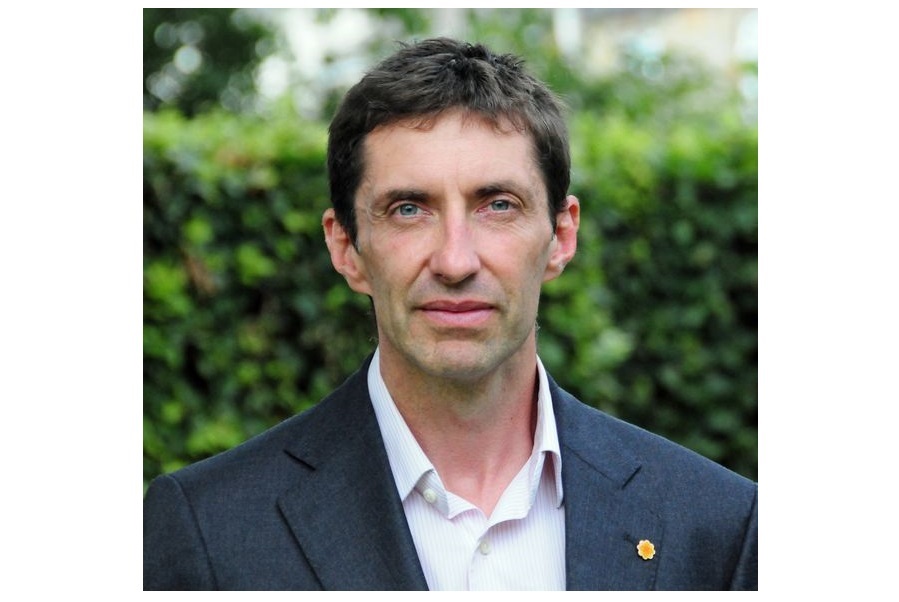
A doctor who trained at DSTL Porton Down and who invented a new type of ventilator this year, is calling for new government guidance to prevent the transmission of coronavirus.
In an open letter sent to all British MPs, Dr Rhys Thomas and Paul Waldeck from PP-L Health Technology Solutions, urge the government to strengthen its guidance on the use of face masks, increase ventilation and also require some indoor locations to use UV-C air disinfection systems.
The letter argues that these steps will be crucial to reducing the spread of the virus in indoor environments where COVID-19 has been shown to linger in the air for several hours.
Dr Rhys Thomas’ career spans several years in the military, in respiratory research and as a consultant anaesthetist, working on the frontline of the battle against COVID-19 as a hospital consultant. Previously, he has worked at the Defence and Science Technology Laboratory, Porton Down where he gained an MD/PHD.
Earlier this year, Dr Rhys Thomas invented a Covid Emergency Oxygenator, which is one of only two devices to succeed in the Government’s Covid Emergency Ventilator Challenge, winning approval by the MHRA. The device, which acts as a continuous positive airway pressure (CPAP) specifically designed as a biological countermeasure to COVID-19, is about to complete its medical trials in the UK and overseas.
Now, Dr Thomas has been appointed as Chief Medical and Scientific Officer at PP-L Health Technology Solutions which helps organisations across the UK to manage and reduce the risk of COVID-19 and other pathogens from spreading through their operations.
Writing to MPs in his new role, Dr Thomas and Chief Technical Officer at PP-L and Chartered Engineer, Paul Waldeck, call for urgent changes to the present guidance for a range of indoor environments. Their letter reads:
“Despite mounting scientific evidence regarding the risk of COVID-19 being transmitted through airborne respiratory microdroplets, also referred to as aerosols or bioaerosols, it is our view that the current “COVID-secure” guidance does not provide adequate protection against this means of transmission.
We are therefore asking for you to join us in calling for this gap in our armour to be strengthened by requiring the use of face masks in a wider range of indoor settings and requiring improved ventilation to buildings and transport.
We are also repeating calls from many in the global scientific community for safe and competently engineered UV-C air disinfection systems to be required in all low temperature indoor work environments where adequate ventilation is not possible, such as in food processing facilities.
In addition, we ask that COVID-secure guidance is also changed to recommend the use of these proven COVID-destroying systems in all other indoor work spaces, venues where the public gather indoors and in transport environments where air ventilation is poor or where air is largely recirculated.”
Citing several recent studies into the transmission of COVID-19 and the effectiveness of countermeasures, the letter recommends that the government should encourage and require high-risk indoor environments to make use of UV-C air disinfection technology.
UV-C is a low wavelength ultraviolet light which has been used for decades to destroy viruses, with its effectiveness having been proven by more than 4,000 scientific papers and studies. As well as being used in highly regulated environments where hygiene is essential such as in laboratories, UV-C is also deployed as a defence technology by military forces around the world against biological weapons.
While it should not be applied to the skin, UV-C can be used for quickly disinfecting surfaces and the air when it is installed into heating, ventilation, air conditioning and cooling systems or as a standalone air disinfection system.
Dr Rhys Thomas and Paul Waldeck argue that this could be especially useful in cool, indoor environments where good ventilation cannot be guaranteed, such as in food production and processing facilities which are ideal environments for coronavirus to linger and spread.
There have been at least 47 reported outbreaks at food production sites in the UK, with a recent study by Pirc Ltd suggesting that these have led to more than 1,461 positive cases and six deaths. Hundreds of other sites in the food sector across Europe have reported outbreaks while in America, half of all cases as of June could be traced back to food processing plants.
Studies have shown that in cool, indoor environments such as these, viable microdroplets containing COVID-19 can be exhaled and remain in an environment for up to 16 hours and travel up to eight metres. With winter approaching, Dr Thomas and Paul Waldeck say they’re concerned that more busy environments will become high-risk sites for the transmission of the virus unless more is done to require greater use of masks or to sterilise airborne microdroplets:
“It is our belief that these additional measures are urgently needed to prevent high rates of COVID-19 transmission in a wide range of settings, particularly in food manufacturing premises where chilled indoor environments represent the perfect breeding conditions for the virus.
With the seasons turning against us and the weather turning colder, we must act quickly to contain and reduce the infection risk. Ongoing lockdowns are not sustainable but without immediate and effective action, they may be inevitable. We have no doubt that science will lead us out of this crisis, but a solution will not solely be found in a vaccine or sequence of vaccines. We can also destroy this virus pre-infection by cleaning surfaces and by sterilising the air with a simple decades-proven medical technology.”
Despite their criticism of the existing COVID-secure guidance, the co-signatories say that the government should be praised for the “positive steps” it has taken so far to prevent the spread of the virus. They explain that the guidance must now evolve to reflect the increased understanding of the virus, writing that the measures they propose would help the UK to adapt to the “new normal” and recover from the pandemic:
“As has been made clear by world leading public health experts and health authorities, the nature of COVID-19 means it is likely to be a long term, if not permanent, threat to public health which cannot be eradicated by a single vaccination. As such, we have a responsibility, indeed, a legal duty under several Acts of Parliament, to find ways to protect ourselves and each other from the virus now and in the future by finding ways to live with it.
We believe that the measures that we are bringing to your attention will help to protect the nation, reduce the threat posed by the virus and enable the British people to live and work in a way which makes the ‘new normal’ far more viable, sustainable, safe and prosperous. Indeed, these measures would help to make the UK a world leader in the COVID-secure economy.”
To find out more about PP-L health Technology Solutions and to read their open letter in full, please visit www.pplpro.co.uk.
 Print this article
For more information, please contact:
PP-L Health Technology Solutions
Kesteven Business Centre
Sleaford
NG34 7DT
Tel: 0800 471 4871
Email: enquiries@pplpro.co.uk
Web: www.pplpro.co.uk
Share article:
Process and Control Today are not responsible for the content of submitted or externally produced articles and images. Click here to email us about any errors or omissions contained within this article.