



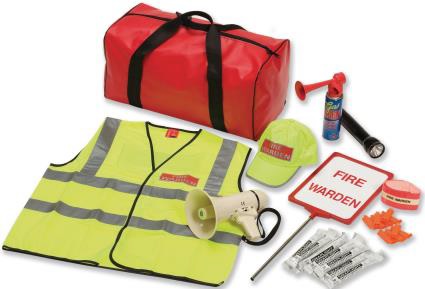
FIRE REGULATIONS MUST REMAIN A HOT TOPIC, SAY SLINGSBY
27/05/2016 HC Slingsby plc
FIRE REGULATIONS are a vital safety component in all workplaces but despite them being governed by stringent legislation, there are still UK employers getting them wrong according to Slingsby.The workplace equipment supplier sells more than 35,000 low priced workplace products across all industries, including a wide range of fire extinguishers, emergency signage, alarms, fire buckets and blankets.
Slingsby's team regularly advises customers about what products they require to maintain a safe working environment and stay on the right side of the law, which includes The Regulatory Reform (Fire Safety) Order 2005 in England and Wales, or The Fire Safety (Scotland) Regulations 2006. A key part of this legislation means employers must carry out regular fire safety risk assessments and take appropriate action to minimise risks. It should also take workers' capabilities into consideration along with specific risks they face in their job role and provide specific training where necessary.
In 2013-14, there were 22,200 fires recorded in the UK in non-residential buildings that included retails units, pubs, cafés, take away shops, garages and industrial manufacturing plants.
Dominic Slingsby, Operations Director at Slingsby, explains: "We've recently seen a number of high-profile fires hitting UK workplaces which have made a lot of organisations consider whether their own procedures and equipment are up to scratch. Ultimately, there are still workplaces that fail to meet the required standard and a common issue is organisations that have reconfigured or expanded their premises without making changes to their fire procedures.
"Generally, all buildings must have adequate escape routes for their size and layout and clear signage should explain fire procedures and highlight exits. In premises where employees could be unaware of a fire, either because it's out of sight or they can't hear warnings from colleagues, suitable fire alarms should be used and emergency lighting may also be necessary in dark escape routes.
"Usually one water based extinguisher is required for each 200m2 of floor space, with a minimum of two extinguishers per floor. However in large or more complex premises, and depending on individual risks, a greater number or wider range of extinguishers could be necessary. Some premises may also require hose reels and fire blankets. Finally it's worth remembering that approximately 80% of workplace fires are put out using portable fire extinguishers."
Below is a guide to the various fire extinguishers on offer:-
Water - Red
Ideal for fires involving solid materials such as wood, paper and textiles etc. Not to be used with liquid fires such as oils and fats, electrical fires and fires involving flammable gases.
Dry Powder - Blue
Multi purpose versions are good for solid materials, liquid fires, flammable gas fires and some electrical fires. However because the powder doesn't cool the fire in the same way that water does, in some cases fires can reignite.
Foam - Cream
Ideal for extinguishing solid materials and fires involving liquids but foam conducts electricity so it shouldn't be used on electrical fires or fires involving flammable gases.
Carbon Dioxide - Black
Good for fires involving liquids because it has a rapid smothering effect and leaves no residue and can also be used on electrical fires and very small fires involving solid materials. Should not be used on fires involving flammable gases.
For more information, please contact:
HC Slingsby plc
Tel: 0800 2944440
Email: sales@slingsby.com
Web: www.slingsby.com
 Print this article
Share article:
Process and Control Today are not responsible for the content of submitted or externally produced articles and images. Click here to email us about any errors or omissions contained within this article.