



Managing extreme temperatures
18/12/2025 Armacell UK Ltd
Thermal management across extreme temperature ranges poses significant industrial challenges. Here Tom Merton, Technical Manager, Armacell® UK, explores the selection criteria for insulation materials capable of meeting such demanding requirements.
Process lines operating at cryogenic temperatures below -150°C and extreme high temperatures reaching 650°C, creates a number of challenges for insulation materials. These extend far beyond simple heat retention or loss—the role of insulation suppliers is to help process engineers maintain thermal integrity across these wide temperature differentials, which would destroy conventional materials.
Choosing insulation materials that can perform effectively within these specifications presents notable operational difficulties. For example, in cryogenic operations, inadequate or improperly specified insulation may cause higher energy usage and degraded product quality due to thermal variations. In elevated-temperature settings, it can trigger equipment breakdown, safety risks, and escalated upkeep expenses.
Boundaries of material performance
Industrial facilities worldwide have to deal with thermal management challenges that push the boundaries of many insulation materials. Consider the complexity of a single facility that might house liquid nitrogen storage systems operating at -196°C alongside high-temperature furnaces reaching 650°C or beyond. This extremely wide temperature range—spanning over 800°C—requires a carefully thought-out approach.
At cryogenic temperatures, insulation materials undergo fundamental changes in their molecular structure. For instance, thermal contraction becomes extreme, with some materials shrinking significantly. At the other end of the scale, in extreme high temperatures, thermal expansion creates its own set of problems, with some materials expanding beyond their design tolerances.
Standard insulations become brittle and crack at cryogenic temperatures, creating thermal bridges that compromise the entire system. At high temperatures, conventional materials degrade, losing their insulating properties precisely when they are needed most. These are the reasons why traditional insulation materials simply cannot cope with these conditions.
The consequences of inadequate thermal management extend far beyond immediate operational concerns. Energy losses from poor insulation can account for 20-30% of total facility energy consumption. In industries where margins are always under pressure, this represents a significant competitive disadvantage.
Even more critically, thermal cycling stress—the repeated expansion and contraction caused by temperature fluctuations—creates fatigue in piping systems, vessels and structural components. This leads to premature failure, unplanned maintenance shutdowns and in extreme cases, catastrophic system failures that can endanger personnel and surrounding facilities.
Innovation in insulation
It is against this background that we developed a material that addresses both ends of the extreme temperature spectrum with a unified approach and that eliminates the compromises inherent in traditional solutions.
The first of these is ArmaGel® XGC, which performs particularly well in cryogenic applications, maintaining its structural integrity and flexibility even at temperatures approaching absolute zero. Unlike traditional materials that become brittle, it retains its flexibility, allowing it to accommodate thermal cycling without developing the cracks that compromise conventional insulations.
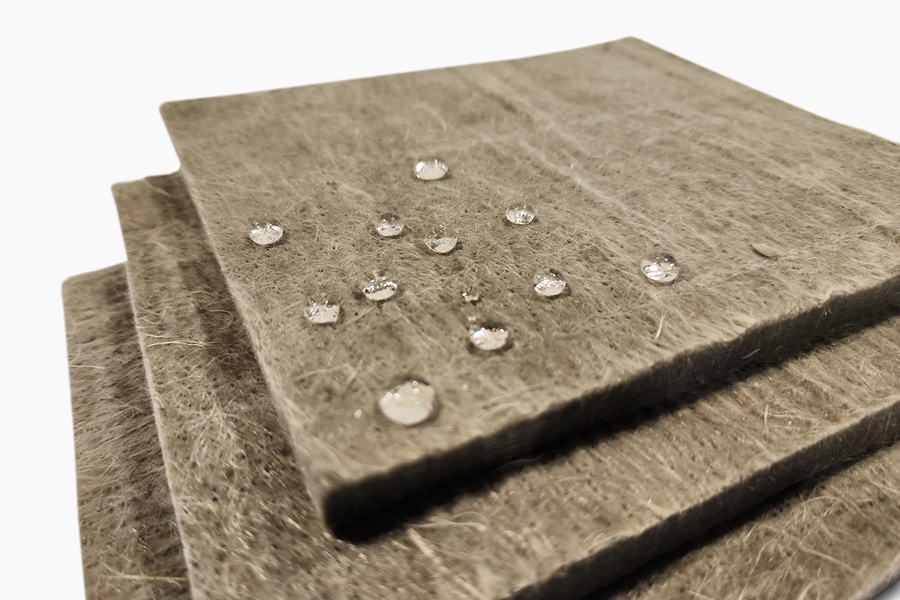
ArmaGel insulation materials are engineered to minimise thermal losses or gains while also providing a hydrophobic protection against moisture. This dual capability means that installations can achieve superior thermal performance while also mitigating the risk of corrosion under insulation (CUI).
At high-temperatures, ArmaGel XGH is engineered to withstand temperatures up to 650°C (1200ºF). It maintains its insulating properties throughout the entire temperature range and the material's thermal stability means that performance doesn't degrade over time, even under continuous high-temperature exposure.
Both of these materials comprise a flexible aerogel insulation blanket that is suitable for cryogenic and dual-temperature insulation applications. ArmaGel XGC and ArmaGel XGH are compliant with ASTM C1728 as well as ArmaGel XGH being compliant to IOGP S-738 (JIP33). Being 80% thinner than traditional insulation products makes them much easier to install and provide important space savings.
When choosing these high-performance insulation materials, it is important to verify that they have hydrophobicity and breathability, which enhances protection against corrosion under insulation (CUI).
Unified thermal management
As industry demands push the boundaries of what they require from insulation manufacturers - from quantum computing applications requiring near-absolute-zero cooling to advanced materials processing at extreme temperatures—we see the demand for unified thermal management solutions continuing to grow.
Successfully specifying and installing these advanced thermal management solutions requires careful planning and expertise. System integration must consider not just the insulation material itself, but how it interfaces with existing infrastructure, control systems and operational procedures.
As industrial processes become increasingly sophisticated and demanding, thermal management technology, as we have seen here, are more than capable of meeting these challenges. Development of advanced new insulation materials demonstrates a fundamental shift in how we will approach extreme temperature applications.
The ability to maintain thermal integrity across these wide temperature ranges opens new possibilities for industrial process design and efficiency. Engineers can now consider unified systems where previously they were forced to accept complex, potentially compromised solutions.
 Print this article
For more information, please contact:
Armacell UK Ltd
Mars Street
Oldham
Lancashire
OL9 6LY
Tel: +44 (0)161 2877015
Email: info.uk@armacell.com
Web: https://www.armacell.com/uk
Share article:

Process and Control Today are not responsible for the content of submitted or externally produced articles and images. Click here to email us about any errors or omissions contained within this article.