



MANUFACTURING PLANT SEES THE LIGHT FOR ENERGY EFFICIENCIES AND COST REDUCTION
05/02/2014 Siemens plc
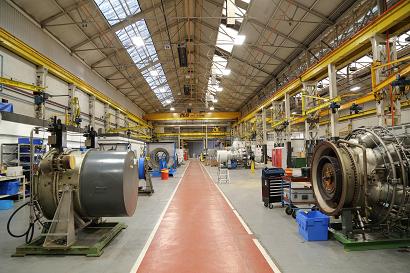
A major Siemens' manufacturing site in Lincoln city centre is benefitting from improved energy efficiency, a better working environment for staff and optimised flexibility thanks to a significant energy efficiency and cost reduction project.The improvements, undertaken as part of the Siemens Energy Efficiency Programme (EEP), has involved the upgrade of the huge site's lighting infrastructure, and seen the replacement of poorly performing and ageing lighting and electrical cabling with the installation of 216 light fittings comprising four high efficiency lamps per fitting. They are designed to deliver improved energy efficiencies, a better working environment for staff and optimised flexibility in terms of lighting control.
Dale Blundell from Siemens Industry explains more: "The Lincoln plant is a large-scale production site for the manufacture and testing of gas turbines. Providing appropriate lighting levels and controls in the production areas is important, but we wanted to achieve this as efficiently as possible from both energy consumption and cost efficiency perspectives. The lighting replacement project followed an overall site energy audit. We knew the improvements to the lighting infrastructure at Lincoln would provide an excellent return on investment if undertaken at the same time as a planned overhaul of the site's roofing structures."
The enhancement was funded under the EEP, designed to finance energy saving improvements across the Siemens' global property portfolio. Crucially, the project was assessed as being capable of delivering projected payback within four years and this was a critical element of meeting the EEP funding criteria.
Dale Blundell continues: "The old lighting and electrical cabling had, in some cases, been in situ for nearly 25 years. It provided poor lighting levels and low colour rendition within the work areas. The lighting has been based on high pressure sodium lamps not appropriate or efficient enough both in terms of current energy consumption targets or lighting control optimisation capability."
The solution has seen the installation of high efficiency T5 fluorescent light boxes incorporating high frequency electronic ballasts with local controls to optimise energy consumption levels based upon ambient daylight levels. The new lamps provide efficiency savings, as well as delivering longer lifecycles which in turn, reduces ongoing maintenance commitments for the company.
The new improved colour rendition of white light - as opposed to the previous orange/yellow - has markedly improved lighting levels within the workplace for the benefit of staff. Using Siemens' innovative KNX technology, site operators are now also able to optimise lighting provision through automated adjustments to the lighting levels and availability. The configuration can easily be altered via the control system to ensure the lighting meets changing demands on site - for instance, it can reduce or switch off light in unused production areas.
Dale Blundell outlines some of the benefits the Lincoln site is now seeing: "Efficiencies and improvements are being felt in many areas. Operating costs have been reduced as the longer lamp life extends the period and frequency at which lamps require replacement. In addition, the lower energy rating of the lamps, combined with the automation controls realise both electricity and carbon savings. On a site of this size, these will be significant reductions.
"The Dali/KNX controls allow the switching arrangements to be easily reconfigured and enable lighting to be supplied to the correct areas at the correct time and to the most appropriate levels to optimise energy use. For example, the high frequency electronic ballasts allow the lighting to be dimmed or switched off as ambient daylight levels increase, thereby saving energy during the peak daylight hours."
Flexibility is also built into the new lighting system. It can, for instance, be switched back on without delay as required. The previous system would have taken up to 15 minutes to reach full output. As a result of the improvements, lighting can be switched on or off appropriately without any impact on the manufacturing areas and the provision of light to important areas of the site utilised as effectively and efficiently as possible.
Finally, with part of the main works site now fully converted to the new lighting system, stock level efficiency for lamps held for replacement purposes has been enhanced. Minimum stock levels kept on site are now more cost effective per lamp installed.
Brian Richardson, Engineering Manager at Siemens in Lincoln commented: "As a result of this radical overhaul of its lighting infrastructure, our busy gas turbine manufacturing plant in Lincoln is benefitting from reduced operating costs, energy consumption and carbon emissions, enhanced lighting control flexibility and improved staff working conditions."
The system will continue to deliver an optimised and highly effective lighting environment for years to come based on a technology solution proven to drive operational efficiencies.
For more information, please visit: www.siemens.co.uk
 Print this article
Share article:

Process and Control Today are not responsible for the content of submitted or externally produced articles and images. Click here to email us about any errors or omissions contained within this article.