


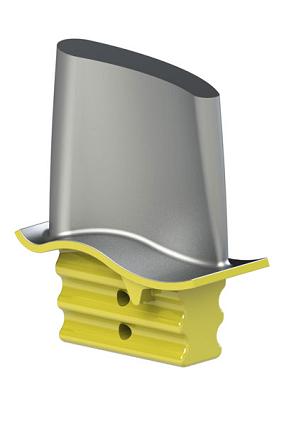
New Hi Vis maskant from Intertronics speeds finishing processes
23/09/2015 Intertronics
The new DYMAX Speedmask® 731 from Intertronics speeds up and improves temporary masking prior to aggressive finishing processes in manufacturing, especially on darker colour substrates. Its unique bright yellow colour enables quick and accurate visual checking of coverage or removal which is enhanced by fluorescence under black light.Speedmask 731 is a 100% organic UV/visible curing masking resin which cures in seconds on demand. Manufacturers can expect to save considerable amounts of time and labour costs in comparison to traditional taping, wax, lacquer systems or removable fixtures. It provides a quick, simple and reliable protection in the finishing of delicate or valuable parts and may also be used to seal cavity openings to prevent contamination. And its unique high visibility yellow colour helps with the application and removal QA process.
Typical applications cover aerospace, power generation, medical and precision metal fabrication where components such as turbine blades and orthopaedic joints can be precisely protected from treatments including grit blasting, acid stripping, plating, anodising, shot peening and plasma spraying.
Speedmask 731 is readily applied by dispensing, spraying or jetting with manual or automated systems and has tenacious adhesion on nickel alloys, steel, stainless steel, aluminium, titanium cobalt and glass. It cures tack free for quick handling and is easily removed by water softening, peeling or incineration - it leaves no residue on non-porous surfaces. Speedmask 731 exhibits 500% elongation and very low shrinkage properties which make it a resilient post cure maskant.
For more information, please contact:
Peter Swanson
Intertronics
Unit 17
Station Field Industrial Estate
Banbury Road
Kidlington
Oxfordshire
OX5 1JD
Tel: 01865 842842
Fax: 01865 842172
Email: info@intertronics.co.uk
Web: www.intertronics.co.uk
 Print this article

Process and Control Today are not responsible for the content of submitted or externally produced articles and images. Click here to email us about any errors or omissions contained within this article.