



Pushing the Boundaries of Pressure Measurement
23/10/2025 Emerson Automation Solutions
Connor Oberle from Emerson explains how performance and diagnostic innovations, along with a focus on greater ease of use, enable the latest pressure transmitters to support increased operational efficiency and process safety in a broader range of applications.
Accurate and reliable pressure measurements are essential in helping to ensure process safety and maximise operational efficiency, product quality and equipment longevity. Pressure transmitters measure the physical force exerted by a fluid (liquid, gas or steam) on their sensing element and convert that measurement into an electrical signal that they transmit to a DCS, PLC or SCADA system for monitoring, control or safety purposes. In addition to pressure, many modern transmitters can also be used to determine flow and level values. This is achieved by using differential pressure to calculate flow through a primary element (such as an orifice plate), or to infer the liquid level in a tank. For critical measurement points – especially in SIL-rated (Safety Integrity Level) systems – poor pressure transmitter performance can result in unplanned downtime, reduced throughput or even a serious safety incident. It is therefore important to deploy intelligent transmitters that can deliver optimal performance and help to keep processes running safely and efficiently.
Embodying this shift towards high-performance instrumentation, some modern pressure transmitters can deliver exceptional measurement accuracy of up to ±0.025% across a wide range of operating conditions. Such accuracy is vital in applications where even slight deviations in pressure readings can lead to significant operational inefficiencies or safety concerns. The latest pressure transmitters are also pushing the boundaries in the key areas of diagnostics, ease of use and application flexibility. Offering a diverse array of new features and functionality, these transmitters do much more than simply measure pressure – they help users to optimise their operations, reduce risk, minimise maintenance needs and lower costs.
Increased diagnostic coverage
It is crucial for pressure transmitters to provide extensive diagnostic coverage. Advanced diagnostics enable the detection of various faults and issues that could result in inaccurate readings, with the potential to compromise product quality, process stability and safety. The more extensive the diagnostic coverage provided by a pressure transmitter, the more it transforms into an intelligent asset that actively supports performance, safety and profitability across the plant
Loop integrity
A good example of the in-built features now available in pressure transmitters to keep processes running smoothly, safely and efficiently is a loop integrity diagnostic that verifies the wiring and configuration of the 4-20 mA output loop. An undetected fault in the signal loop could lead to serious consequences, so the diagnostic continuously monitors the loop for any unexpected changes, wiring issues or installation errors that could compromise the integrity of the transmitted data. Users are alerted to any problems in real time, enabling faster troubleshooting and reduced downtime. This proactive functionality not only enhances measurement reliability and plant safety but also supports predictive maintenance and compliance with industry standards.
Plugged impulse lines
One of the more common issues in differential pressure measurement is the blockage of impulse lines. Over time, process media such as sludge, crystallised fluids or particulates can accumulate in these lines, restricting flow and leading to inaccurate or misleading pressure readings. Without diagnostics, these blockages can go unnoticed and cause significant process deviations or failures. Pressure transmitters can now overcome this challenge with a diagnostic that continuously monitors for abnormal pressure behaviour that signals a potential plugging condition. When such behaviour is detected, an alert is sent to operators, allowing for proactive maintenance before the issue escalates. By identifying problems early, this diagnostic supports safer operations, minimises the risk of unscheduled downtime, and reduces total maintenance costs.
Process intelligence
It is also important for pressure transmitters to be able to monitor process noise – the small, rapid fluctuations in pressure that occur naturally during normal operations due to equipment dynamics or flow turbulence. Changes to the pattern or signature of process noise can indicate a variety of developing issues, such as pump cavitation, entrained air, steam leaks, flame instability or column flooding. To meet this challenge, some pressure transmitters now incorporate a powerful process intelligence diagnostic that captures and analyses the noise signature of the process, establishing a baseline of what ‘normal’ looks like. When the transmitter detects a deviation from this expected pattern, it signals that something may be going wrong. By alerting operators early to these subtle shifts, the transmitter enables faster operator response, prevents unplanned shutdowns, and helps maintain optimal process performance.
Optimised ease of use
In addition to providing exceptional measurement accuracy and advanced diagnostics, the latest pressure transmitters can also help to optimise ease of use, via a range of features based on human centred design principles. For example, password-protected Bluetooth® wireless communication capability enables users to securely access some transmitters remotely via a tablet, smartphone or laptop, for diagnostics, configuration, calibration and device status purposes. This simplifies configuration and troubleshooting and increases safety by keeping workers away from hazardous areas.
When personnel need to quickly check pressure readings, but do not have access to handheld communicators or the control room, they can do so via a transmitter’s local indicator display. By enabling personnel to view live readings, verify transmitter operation, access diagnostic information and perform local configuration, these displays improve operational awareness, speed up troubleshooting and enhance safety. Pressure transmitters are now available with advanced, high-visibility local indicator displays that have been designed for optimal ease of use. Large, high-resolution graphical displays provide exceptional readability, even in low-light environments, due to integrated backlighting and high contrast. Intuitive interfaces make on-site interaction as efficient as possible, with clear menus and diagnostic indicators. Supporting multiple languages, these displays enable users across global operations to easily navigate settings and interpret data.
Integrated flow and level measurement
As stated earlier, pressure transmitters can be used to determine flow and level values, and some modern transmitters can perform these calculations directly within the device, eliminating the need for external flow computers, level controllers or manual calculations. This integration simplifies system design, reduces the number of components to specify, procure and maintain, and helps to avoid potential mismatches or errors between separate devices. It also shortens commissioning time by reducing configuration and integration work. With fewer signal conversions and less reliance on additional hardware or software, the risk of data errors is significantly reduced. Additionally, maintenance becomes easier, as operators only need to interact with a single device for pressure, flow or level, reducing the chance of oversight. Overall, this consolidated approach increases reliability, improves measurement accuracy, and lowers total cost of ownership across the lifecycle of the system.
Expanded application range
Organisations can now implement pressure transmitters with a suite of advanced features that significantly expand their suitability for use in challenging and high-performance applications. These new capabilities enable these transmitters to be used in roles that previously required multiple instruments or specialised solutions.
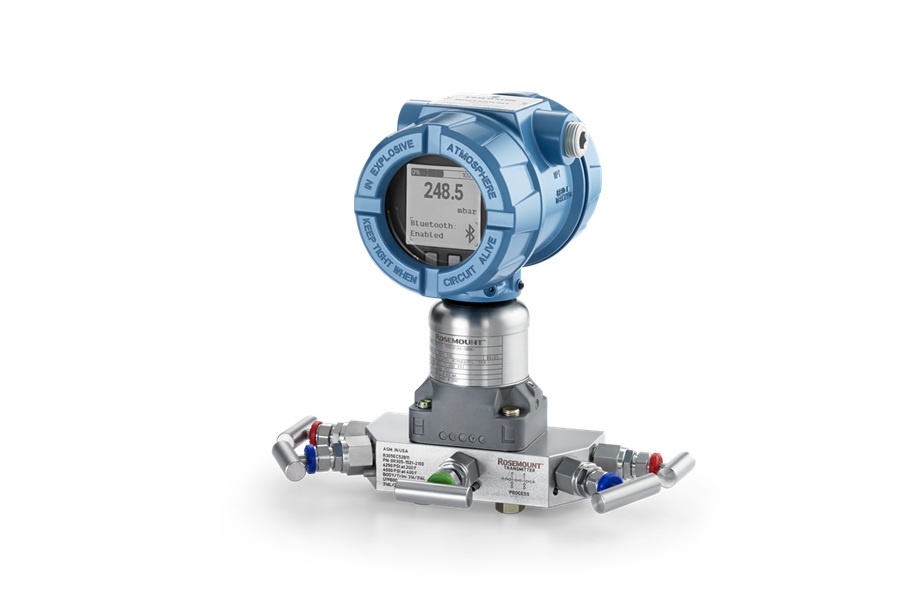
For example, the Rosemount™ 4051S Pressure Transmitter from Emerson offers an impressive 800:1 turndown ratio. This means that the device can accurately measure pressures across a very wide range, from as little as one unit right up to 800 units. This capability is important because it eliminates the need to buy and install multiple transmitters for different pressure ranges, simplifies engineering, procurement and maintenance, and reduces spare parts inventory and costs.
Another significant innovation is the option to have fully independent, high-voltage relay switches integrated within a pressure transmitter. These built-in switches can act as local alarms or interlocks, enabling direct control or shutdown functions based on process conditions, without relying on a DCS or PLC. This provides a layer of asset protection for critical measurement points by enabling faster, localised responses to dangerous conditions such as overpressure or vacuum failure. These switches are fail-safe, isolated and programmable, offering a compact and reliable safeguard in applications where uptime and equipment integrity are paramount.
For dynamic applications such as compressor surge control, where speed is crucial, pressure transmitters are now available with an optional fast time response of 40 milliseconds. This allows the transmitter to rapidly detect pressure changes and support immediate corrective action, protecting assets and maintaining system stability in fast-moving processes. The result is improved loop responsiveness and reduced risk of equipment damage or process disruption.
Remote proof-testing capability
Pressure transmitters that form part of a safety instrumented system must be periodically proof-tested. This is essential to maintain the SIL certification of safety loops and involves conducting operational tests to uncover failures that would prevent the device from operating as intended when required. Some pressure transmitters provide step-by-step instructions to guide operators through partial proof-testing procedures. This enables them to quickly and easily test the entire safety loop, including the transmitter, from a remote location, without removing the device from service or shutting down the process.
This in-situ partial proof-testing capability provides an additional check by verifying that the transmitter’s sensor is correctly communicating measurements to the transmitter electronics. This reduces the likelihood of undetected faults remaining in the device between full proof-tests. Partial proof-testing can therefore enable longer intervals between full tests without compromising safety. SIL compliance can be maintained without process interruption, and because manual testing in the field is not required, personnel are kept away from hazardous areas, time is saved, and the potential for human error is avoided.
Summary
In an increasingly complex and performance-driven industrial landscape, modern pressure transmitters are evolving into intelligent, multifunctional devices that go far beyond basic measurement. With advanced diagnostics, in-situ proof-testing, expanded application flexibility, and built-in capabilities such as flow and level calculation, pressure transmitters can now play a vital role in increasing process efficiency and reducing risk, helping to maintain smooth and safe operations.
To learn more about Emerson’s latest pressure transmitter, visit: www.Emerson.com/Rosemount4051S
Connor Oberle is a global pressure product manager with Emerson. In this role, he works to implement product solutions that improve plant safety, increase process efficiency, and enhance process insight. Connor holds a B.S. in Mechanical Engineering from the University of North Dakota and an MBA from the University of St. Thomas.
 Print this article
For more information, please contact:
Emerson Automation Solutions
Email: uksales@emerson.com
Web: https://www.Emerson.com
Share article:

Process and Control Today are not responsible for the content of submitted or externally produced articles and images. Click here to email us about any errors or omissions contained within this article.