



Siltbuster: Wastewater and Contingency Planning
07/07/2020 Siltbuster Process Solutions
With current climate pressures placing greater pressure on capital investment it is essential that contingency planning continues to be a vital tool in ensuring that production and environmental compliance is not adversely affected. Here, Rich Matthews, Managing Director at Siltbuster Process Solutions, the water treatment specialist, discusses the vital role contingency planning has to play for wastewater and explores some of the key areas that need to be addressed before implementing a strategy.Contingency planning for wastewater can often be overlooked in the production chain but is a vital component of the overall cycle and environmental credentials for the business operation. In fact, since the 2014 Guidelines a standardised approach in which sentences for a pollution event are determined, this has ensured appropriate focus on contingency planning. The level and breadth of fines that have been applied are now based not only on the significance of the incident but also the size of the company and the degree of corporate culpability. This reinforces the message of understanding the full extent of risk to the business in environmental terms as wells as production.
Identifying the weak spots
For effective contingency planning, it is essential to identify the weak spots in the end to end process; this is particularly relevant to the wastewater treatment plant. Following identification; evaluation then takes place on the criticality and the impact of the failure or exceedance and therefore mitigation strategies can be focused. However, it also has to be recognised of the types of events that can lead to failure or exceedance. The 'What if' scenario and what is the business impact if action isn't taken.
Production spikes or new product lines
The introduction of a new product line or a sharp increase in production - typical scenarios for seasonal businesses - can affect effluent characteristics and put compliance at risk. This is because, although these are typically planned events, the planning often doesn't include considering the impact on effluent and its consequences. With proper planning, contingency measures could be implemented. These could include using additional, temporary treatment equipment which boosts capacity when needed.
This is particularly relevant where the economy impacts food and beverage demands where product lines can see significant changes and therefore can place significant stress on existing wastewater infrastructure.
Company Expansion
Part of contingency planning also needs to look at proposed company growth plans. This means sales and production functions recognising the close interplay between what they do. Looking at contingency planning in this instance is seeking to expand an asset base that is often lower down the capex priorities. This often means that effluent treatment plants are stressed and therefore ability to flex these assets becomes more critical through more bolt-on type solutions to ensure minimal impact on existing operations.
Other production changes
There are many other unplanned events that can have a similar impact, such as spillages, out of specification product dumps and new hygiene regimes. All will impact on effluent characteristics and as such need to be part of a contingency plan.
It's not just what comes down the pipe that can cause havoc. If a company has an on-site treatment facility to manage, problems can arise there too. So, it is worth taking a critical look at all aspects of the treatment facility's management. Identifying those which have potential to cause harm (or a breach of compliance), considering the potential severity of the harm and its likelihood - and then agreeing measures.
Here are just some of the many aspects which may need to be considered:
Sludge Disposal - most treatment plants generate a by-product; how secure is the disposal route? What happens if it becomes unavailable, either temporarily or long term - what alternatives have you got and what is the cost impact?
Chemical Supply - what are the re-order levels and which are the most critical ones? How often have you come close to running out and what would happen if you did?
Loss of power and/or control - this not just confined to standby power generation. What if you had a catastrophic panel failure? How would the plant operate? Who is familiar with your PLC program - where are the backups? Could temporary starters be rigged up if needed? Who can support you with this? Can part of your effluent volume be tankered away if needs be - to where? Who could do it - how much would it cost?
Pumping capacity - this could be lost due to loss of power or through mechanical failure. What happens if you lose that inlet pumping station or the recirculation feed to that critical high rate filter? How could you rig up a temporary diesel pump set? Where would flexible hoses be connected, what size pumps would be needed? Get your pump hire company involved so you'll know what to ask for should a problem arise.
Critical Spares - the lead times that might apply for replacement of critical items could be a problem - so they need to be prioritised accordingly. Make sure spares inventories, if kept, are maintained and that items are re-ordered when used.
Agility is the Answer
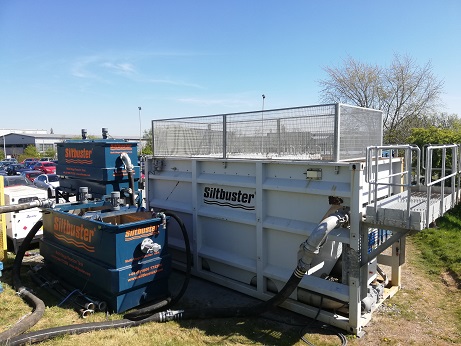
One way to implement your resilience plan is to seek a more agile investment approach, such as the use of modular temporary solutions, which are becoming of greater interest due to their agility in installation and ability to be easily deployed for seasonal loads, capital maintenance, and flexibility.
To get better treatment agility, companies are using solutions that have been manufactured off-site, providing more opportunity for innovation, reducing the capital cost of systems, and minimising disruption on-site. Additionally, by aligning operational flexibility in modular effluent treatment plant solutions, you will have an agile solution to managing the business' risk on compliance and enhancing efficiency in the management of the waste streams.
Siltbuster has the experience in its teams of working in developing these strategies; with access to onsite laboratory to assist for solution development and process optimisation. More importantly, the access to an extensive range of rental equipment allows for pilot trials to be conducted to resolve compliance but also to support expansion plans in a responsive manner.
For more information, please visit: www.siltbusterprocesssolutions.com
 Print this article
Process and Control Today are not responsible for the content of submitted or externally produced articles and images. Click here to email us about any errors or omissions contained within this article.