



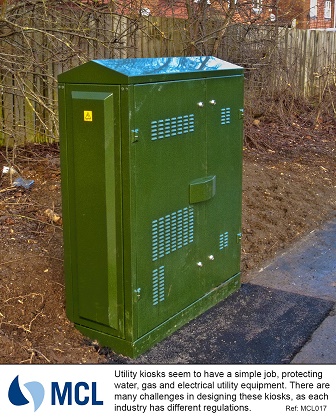
Utility kiosks under threat - they have to withstand much more than you think
27/03/2017 MCL Group Industries Ltd
Utility kiosks may blend into the background and you may pass several every day without a thought but they contain essential infrastructure components and if the services were to fail, we'd certainly know about it. So spare a thought for the kiosks. Did you know that they are under threat from all angles? Constantly battered by the British weather, attacked by vandals and thieves and at risk from network disruption, the kiosks don't exactly have an easy life. Here, Andy Hobbis, business development director of MCL Industrial Enclosures, explores further.Utility kiosks seem to have a simple job, to protect water, gas and electrical utility equipment. However, there are many challenges in designing these kiosks, as each industry has different regulations, such as the gas industry standards (GIS) regulations for the gas industry. Unlike other services, a utility outage, even for an hour, has serious consequences. Customers start to panic, hotlines become jammed and the company's reputation takes a big hit. Clearly, the job of the kiosk is mission-critical.
The first major threat to a kiosk is the weather. We're not blessed with the most tropical climate in the UK, so utility kiosks are used to protect equipment against rain, hail, snow and high winds. It is essential that kiosks are weather sealed and corrosion resistant, as any ingress or wear could cause small holes, allowing water or small animals into the kiosk, who could chew at cables.
Another threat to the kiosk is human interference. Much of the equipment used in utility kiosks is of high value, so it's a target for thieves but a locked kiosk can also attract vandals. Last year, Utility Week reported how utility kiosks were now having to be secured against terrorist threats with perpetrators possibly using this soft target as a means to cause maximum disruption on borehole and gas mains supplies.
All of these threats mean it's vital that utility kiosks are adequately secured. MCL's Securbilt kiosks are tested and certified to the Loss Prevention Certification Board's (LPCB) security level three or four. This means they can withstand a ten-minute attack with experienced attempts at forced entry and against a variety of tools. In particular, LPCB security level four kiosks can withstand battery-powered tools for up to ten minutes. Although all of MCL Groups' kiosks are made in GRP, a secret blend of additional materials is also used to maximise damage resistance. MCL Group's composite materials, which can be as strong as steel but are lightweight and durable, have no scrap value, meaning they are less of a target for thieves.
Aside from attacks, there is of course a slight risk of explosion with electrical and gas infrastructure. MCL Group's kiosks have specific features to overcome this risk. Gas leaks can ignite and explode, so kiosks are designed with additional ventilation to dissipate any leaks within the kiosk. Substation kiosks are available with a lifting explosion relief roof in order to reduce pressure. They have extendable brackets, which allow the roof to lift upwards, to dissipate the force of an explosion, and then return to its original position.
So, the next time you pass a kiosk, have a think about the threats they face. The utilities that we take for granted are dependent on these kiosks and if they weren't properly regulated, secured, maintained or constructed, we would face severe disruption to our water, gas and electricity supplies.
For more information, please visit:: www.mcl-grp.co.uk
 Print this article
Share article:

Process and Control Today are not responsible for the content of submitted or externally produced articles and images. Click here to email us about any errors or omissions contained within this article.