



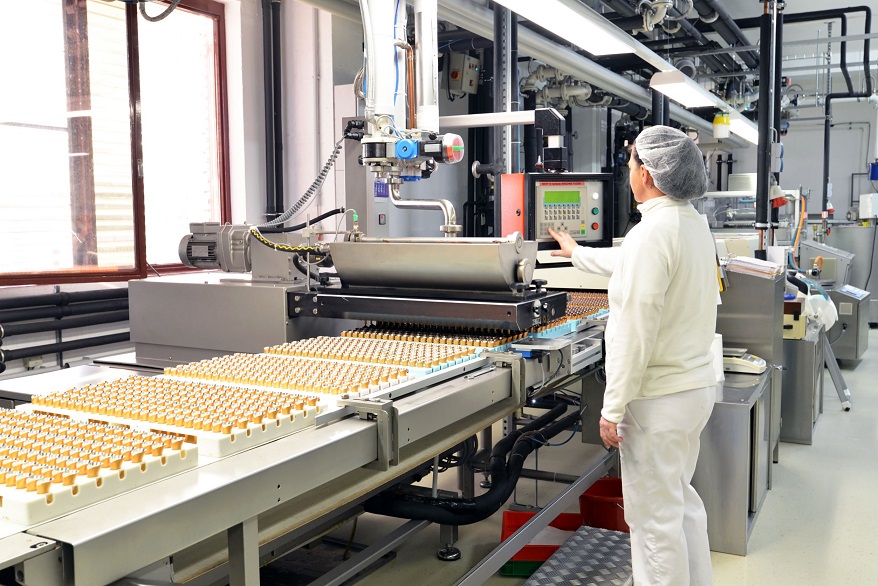
Waste not, want not: How automation can reduce food loss in the food industry
12/08/2022 EU Automation
The UN Food and Agriculture Organization (FAO) reported in 2019 roughly 1.3 billion tonnes of edible food per year were lost or wasted globally. While food waste occurs largely in households and retail, food loss occurs during post-harvest, transport, storage, distribution, processing and packaging, meaning it is down to food manufacturers to reduce. In this article, Neil Ballinger, head of EMEA at global automation parts supplier EU Automation, discusses how automation can reduce food loss during manufacturing processes.
In 2018, the Waste and Resources Action Programme reported that 1.5 million tonnes of food waste, valued at around £19 billion, was produced by UK food manufacturers. The FAO reported some of the direct causes of food loss and waste, such as lack of proper process management and prolonged storage.
Automation can help address these issues by limiting human error, improving operations and automating product tracking.
Reducing human error
After studying 47 food manufacturers in Belgium, researchers at Brunel University London and Ghent University found that human error accounted for 10.9 per cent of all food waste. Automation can help reduce human error by digitalising manual work that is less engaging and more likely to cause mistakes. This can be achieved by installing plant management software to help streamline processes by collecting data automatically, eliminating the need for whiteboards and clipboards.
“In many instances, there wasn’t proper training or a standardisation of work being applied in their workplace,” said Dr Manoj Dora of Brunel Business School upon the study’s findings. “As a result, there was a greater tendency toward errors, and therefore, more food waste.”
While proper training is always necessary, automation can help with the standardisation of production. Implementing technology such as IoT sensors can help standardise vital processes like quality control and temperature checks, making them run more efficiently and ensuring every product has the same level of inspection.
Traceability
Estimates by the FAO state that 13.8 per cent of the total food produced globally is lost between the farm and transport to retail. The installation of automated tracking systems can help reduce supply and product loss by automatically tracing and monitoring food from supply to delivery.
Automating the tracking system means there is no need for manual inputs that can be affected by human error, improving supply chain management. Tracking systems also allow supply chain managers to collect data that can help determine inefficiencies and unnecessary expenses in the supply chain. The 2019 Waste Management journal reported that IoT-based digital food waste monitoring systems can reduce food waste by almost 60.7 per cent.
Maintenance and downtime
Despite the many benefits automation brings to the food industry, manufacturers are still hesitant due to the higher level of maintenance needed and the risk of equipment downtime that could cause more food waste.
According to the U.S. Department of Agriculture (USDA), perishable foods, such as meat and milk, should be discarded if held above 5°C for more than 2 hours. Manufacturers might fear that in case of unplanned downtime caused by equipment failure, the food might be spoiled due to the inability to process and package it in a timely manner. However, predictive maintenance and partnering with a reliable and fast-delivering automation parts supplier can help avert these issues.
Automation in the food industry can be daunting for many manufacturers, but change is inevitable. Automation technology can progress the industry while reducing food waste. Those in the food industry who have yet to automate their processes should consider starting a trial run to see if digitalization might help them limit food waste.
EU Automation has locations in the UK, US, Germany and Singapore, providing a fast delivery of automation spare parts thanks to its network of hundreds of global suppliers. To get a fast, hassle-free quote on new, reconditioned and obsolete automation parts, call us at +44 1785 785100 or fill out our enquiry form.
 Print this article
For more information, please contact:
Jonathan Wilkins
EU Automation
Parker Court
Staffordshire Technology Park
Stafford
ST18 0WP
Tel: +44 (0) 845 521 3088
Email: jonathan.wilkins@euautomation.com
Web: https://www.euautomation.com
Share article:
Process and Control Today are not responsible for the content of submitted or externally produced articles and images. Click here to email us about any errors or omissions contained within this article.