


What the ATEX marking on a panel or instrument tells you, and what it does not
11/11/2026 Ex-Machinery Explosion Proof Equipment B.V
Every Ex-rated control panel, transmitter or motor carries a string of letters and numbers. Most engineers can decode the gas group and the temperature class. Fewer open the certificate behind the nameplate, and that is where the conditions of use live. A short guide to reading both, and to the boundaries of equipment certified for Zone 2.
The marking is a summary, not the whole story
Under the ATEX equipment directive (2014/34/EU) and the EN IEC 60079 series, the nameplate states where a device may be installed: the equipment group (II for everything outside mining), the category (1, 2 or 3, for gas as G and for dust as D), the type of protection, the gas or dust group, the temperature class and the equipment protection level. A typical panel reads II 2G Ex eb IIC T4 Gb; a Zone 2 instrument might read II 3G Ex ec IIC T4 Gc. The four-digit number after the CE mark identifies the notified body that monitors production, not the one that issued the certificate.
What the marking cannot tell you is how the device must be installed and maintained to stay within its certificate. That information is in the certificate itself and in the manufacturer's instructions, and for a surprising share of equipment it comes with conditions.
Reading the certificate behind the plate
For electrical equipment in categories 1 and 2, the certificate is an EU-type examination certificate issued by a notified body, with a number such as DEKRA 21ATEX0123 X: the issuing body, the year of issue, the scheme, a serial number and, where present, a suffix. For category 3 the manufacturer assesses the product under its own responsibility and issues an EU declaration of conformity; a notified-body certificate is not required, so the declaration and the technical file are the documents to check. IECEx certificates of conformity follow the same logic with a different number format and are what most international sites ask for.
Three things on a certificate deserve a close look. First, the type designation: it must match the nameplate exactly, including options and suffixes, because a certificate for model A-100 says nothing about model A-100-W. Second, the marking stated on the certificate, which should be identical to the plate. Third, the section headed specific conditions of use.
What the X means in practice
The suffix X signals that the equipment is safe only under conditions the installer or operator has to meet. Typical examples: a narrower ambient temperature range than the standard minus 20 to plus 40 degrees Celsius; a non-metallic enclosure that may only be cleaned with a damp cloth to avoid electrostatic charging; cable entries that must use glands of a specified type and rating; an intrinsically safe transmitter whose input parameters have to be matched to the barrier; or an Ex e terminal box with a maximum power dissipation that limits how many terminals and which conductor sizes may be fitted. A suffix U marks a component that is not complete on its own and may only be used as part of other certified equipment.
None of these conditions appears on the nameplate. They have to be copied from the certificate into the installation design, the maintenance instructions and the inspection schedule, which is why an Ex register that only lists markings is incomplete.
Where Zone 2 equipment may and may not be used
- Category 3G equipment (EPL Gc) belongs in Zone 2 and in non-hazardous areas. It may not be used in Zone 1, not even for a short task; the zone classification, not the duration of the work, decides.
- A device marked 3G is not suitable for Zone 22. Dust protection is a separate assessment and a separate marking (3D, EPL Dc), even if the same device happens to carry both.
- The gas group must cover the substances on site. A IIB instrument is not acceptable where hydrogen or acetylene can be present; those require IIC.
- The temperature class must sit below the ignition temperature of the gases or vapours present. T3 (200 degrees Celsius maximum surface temperature) is fine for most hydrocarbons but not for every solvent.
- Zones can change. Maintenance that opens the process, a new vent or a modified pump seal can move a boundary, and equipment that sat in Zone 2 yesterday may sit in Zone 1 tomorrow. The classification drawing and its revision date are part of the check.
Assemblies and modified panels
A certified enclosure does not make a certified panel. An Ex e or Ex d panel is certified as a whole, with a defined list of components, their heat dissipation and the entries in the enclosure. Adding a terminal, drilling a hole or swapping a gland for a different type puts the panel outside its certificate until it is reassessed. The same applies to machinery built from certified parts: once components are combined, the assembly has to be assessed as a whole, including non-electrical ignition sources such as hot bearings and friction.
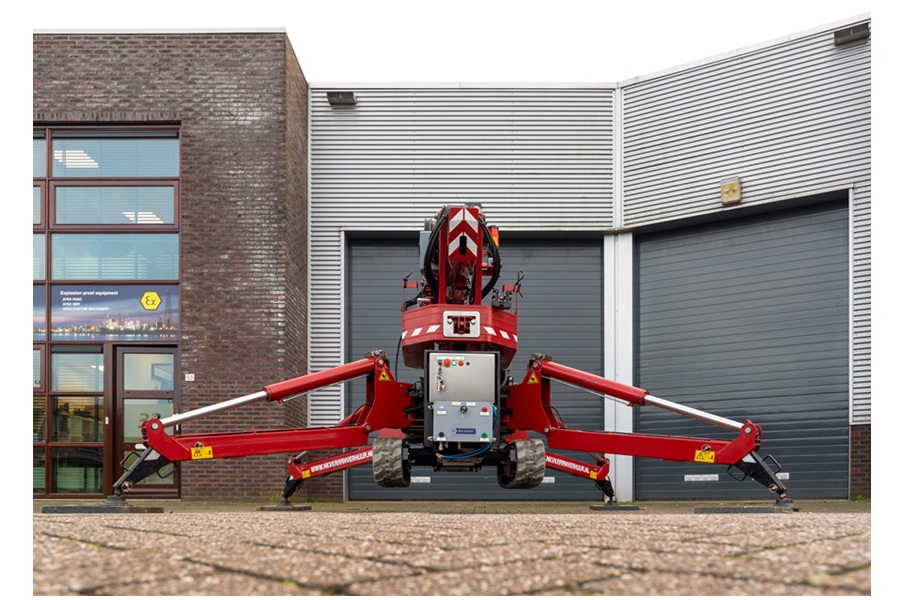
Suppliers that convert standard machinery and build explosion-proof climate equipment for hazardous areas, such as Ex-Machinery in the Netherlands, issue the declaration for the complete unit and attach the conditions of use to it. For the operator that is the document to file, together with the certificates of the individual components.
A five-point check before a device goes into the zone
- Compare the type designation on the certificate with the nameplate, character by character.
- Check category, gas or dust group and temperature class against the classification drawing for the exact location, and confirm the drawing is current.
- Read the specific conditions of use and record how each one is met in the installation and in maintenance.
- For assemblies and panels, ask for the certificate or declaration of the complete unit, not only of its components.
- Enter the device, its certificate number and its conditions in the Ex register so the next inspection under EN IEC 60079-17 has something to inspect against.
Read this way, the nameplate is the index and the certificate is the book. Most non-conformities found in Ex inspections are not faulty products; they are good products installed outside the conditions that made them certifiable.
 Print this article
For more information, please contact:
Frank Matena
Ex-Machinery Explosion Proof Equipment B.V
Tinstraat 33
2984 AN Ridderkerk
The Netherlands
Tel: +31 (0) 85 0713041
Email: fm@armadex.com
Web: www.armadex.com
Share article:
Process and Control Today are not responsible for the content of submitted or externally produced articles and images. Click here to email us about any errors or omissions contained within this article.