



World Economic Forum: Key takeaways for manufacturers
28/02/2023 Augury Systems Ltd
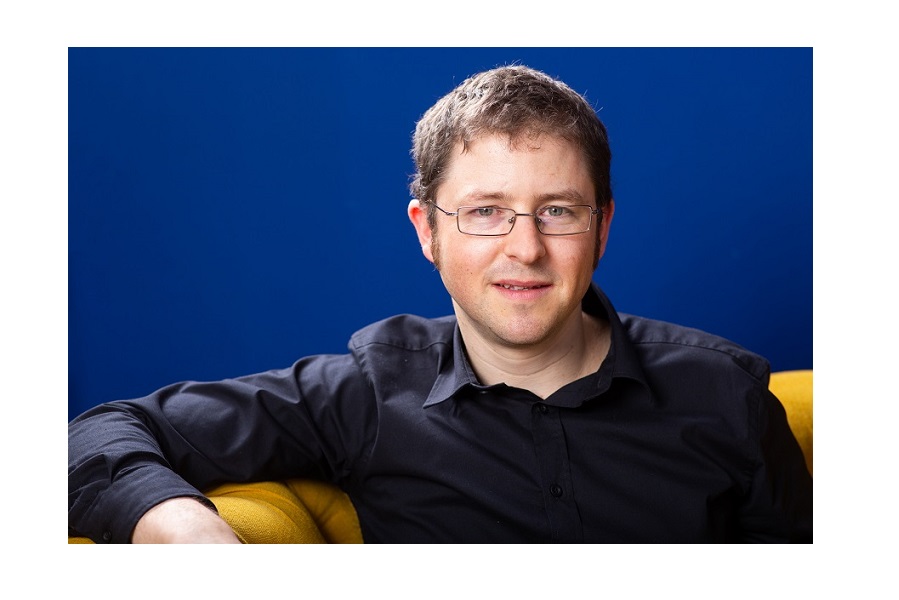
Augury Co-Founder and CEO?Saar Yoskovitz?travelled to Davos 2023 to explore how manufacturing can become the “lighthouse that can lead the way towards solving the world’s greatest challenges.” Here, he shares his biggest takeaways.
Last month, the World Economic Forum’s Annual Meeting at Davos was both intense and inspiring. World leaders in politics, social institutions and industry were among the attendees. Having these people together in one place is a rare opportunity, as is the chance to talk to them and hear their thoughts, as these discussions can shed light on global problems and creative solutions. The atmosphere has changed since the Annual Meeting in May of 2022, giving a glimpse into what lays ahead for manufacturing in 2023.
During the last Annual Meeting, the world was facing a recession, war had just started in Europe, supply chains were at risk, and "de-globalization" was the most used word of the year. Any discussion about the environment or financial support for sustainability seemed unproductive in those conditions.
This year, things appear to be considerably more stable: Ukraine is holding up, the energy crisis has been averted in most countries, global inflation appears to be under control, and supply networks are expanding. All these factors have made it possible to have a far more fruitful discussion on how to address the problems manufacturers are currently facing.?
Technology’s Coming of Age
Each annual meeting brings a rush of studies on topics such as?how circular transformation of industries is unlocking new value,?how over a hundred ‘Lighthouse Factories’ are showing the way forward to a more sustainable future, and?how AI is being applied to both fight climate change and spur growth. And what's good about these reports is how they're starting to focus more on what's actually happening rather than what should be done.
The next stage involves scaling these lighthouses across the industry; it is the next step in building a society in which the combined efforts of humans and machines improve the quality of life in every way.
Circular Supply Chains
Impending regulations around carbon reporting, like Scope 3, are causing larger organisations to make sustainable and circular supply chains a top priority. This new form of reporting looks at a product's whole footprint by additionally taking into account the upstream and downstream effects of its supply chain. Some people have already called it "a nightmare."
It can definitely be a challenge. Everyone is doing their best to track it effectively, but there is a? lack of necessary frameworks and tools. To make matters worse, Scope 3 also varies depending on the manufactured product. For example, Scope 3 only accounts for 6% of the emissions from a cement factory, but it might account for 80% of emissions from an automobile or food company As a result, manufacturers must band together as an industry to the needed impact.
Enter Glocalisation and Friendshoring
De-globalisation was last year’s big word but this year it has been replaced by glocalisation. This means that while our supply chains are more localised, we are nonetheless internationally connected. Glocalisation can help manufacturers become more resilient, but it is also happening naturally, as the reality is alternative energy sources are typically closer to home and more difficult to move. For example, solar energy is produced during the day and wind energy during windy conditions; but at the moment, neither can be stored in bulk or transported, which naturally leads to more decentralisation. Factories will go where the cheapest and cleanest energy is available, as data centres have done in the past.
Friendshoring is another emerging term at WEF this year. It is replacing offshoring and reflects how manufacturers are naturally turning towards countries that share similar values. Friendshoring can reduce reliance on a single source, like in the semiconductor sector. A significant step in these approaches is the US/EU IRA and CHIPS laws.
Talent and Talent Again
Access to talent is still a hot topic, but with a new twist. Now, companies are shifting their focus from Labour Cost Arbitrage to Skills Arbitrage when making investments in new geographies. In other words, people are asking themselves where is the best talent that can use automation and digital tools to increase productivity. This shift towards skills is expanding the talent pool.
In It Together
The challenges of mid-size companies are looking very similar to those that some of the world’s largest companies. Everyone is looking for signs of economic certainty for the next couple of years. Leaders of all companies are trying to balance the need for expansion with wise resource management.
Simultaneously, global issues such as sustainability and the efficiency and effectiveness of a global industrial and manufacturing base are all being considered seriously by all manufacturers with workforce transformation and skills-related topics being top of mind. Businesses of all sizes now understand that progress and growth still depend on the fundamentals: people coming together to work out the details, agree on a course of action, and put in a genuine effort to bring about change.
Let’s get to work
In short, this year’s WEF leaves space for optimism. Manufacturers have more clarity on the challenges lying ahead and what the industry needs to do to overcome them. It certainly won’t be easy, but by working together, industry and governments and have a better chance to come out on top and chart a new path forward. We can all do this.
 Print this article
For more information, please contact:
Augury Systems Ltd
39 Haatzmaut Street
1st Floor
Haifa
3303132
Israel
Tel: +972-77-4395527
Email: info@augury.com
Web: https://www.augury.com/
Share article:
Process and Control Today are not responsible for the content of submitted or externally produced articles and images. Click here to email us about any errors or omissions contained within this article.