


Flexibility as competitive advantage: Innovation process engineering solutions for the production of coatings
02/05/2025 ystral gmbh maschinenbau + processtechnik
In the production of varnishes and paints, flexibility has become a crucial factor: Users must be able to manufacture a wide range of different batch sizes as well as a large number of products and product versions to respond quickly to new market conditions or changed regulatory guidelines. Processes can be designed flexibly and future-proof through modularisation of the process technology on system and machine level, and the use of innovative mixing and dispersion technologies.
Flexibility in production is not only required with regard to batch sizes and recipe versions, but also in relation to the processes themselves. It is often the case that the product range is expanded or new raw materials and additives are used which can no longer be processed with conventional technologies. The drive towards new raw materials often finds its origin in the purchase department as well, which is successful in procuring a more cost-effective raw material, however, this is more difficult to be processed, as it is available in agglomerated form for example, and must now be granulated much more extensively. In addition, new provisions and safety regulations are constantly being added – this powder must no longer be added openly, this additive has undesirable side effects, biocides must only be used from now in smallest quantities. Ultimately, customer requests change. Quality requirements are constantly increasing.
Conventional process engineering systems can often only be adapted to the changing requirements with great effort. This applies for example to the trend of solvent-based towards water-based products. Due to the high surface tension of the water, the induction of powders and polar liquids into water-based media is more difficult than induction into solvent-based products. This is why new processes are required.
With regard to the batch sizes that can be realised in one process vessel, traditional technologies such as agitators and high speed dissolvers also only allow little flexibility. The significantly limited usability of a conventional agitator or high speed dissolver is shown in Fig. 1. The machines cannot be used in the fill level ranges shown in red, as the fill level is too low. It is as much as three ranges for the propeller mixer (middle). The two top switch-off ranges result from the impermissible pass-through operation. If the agitator is running when the propeller passes through the liquid surface, the propellers splash, fold in air, charge up, and can destroy the bearing and seal. Thus, in case of a falling or rising fill level, as can always be found in processes, the agitator must be switched off early enough. The ranges marked in yellow only permit a reduced power input, as the fill level above the respective tool is too low.
Whilst it may be possible to lift and lower dissolver discs within certain limits, the range of optimum power input is also compromised.
Traditional agitators and dissolvers can only be used to a limited extent for variable fill levels. Different system sizes are required for different batch sizes.
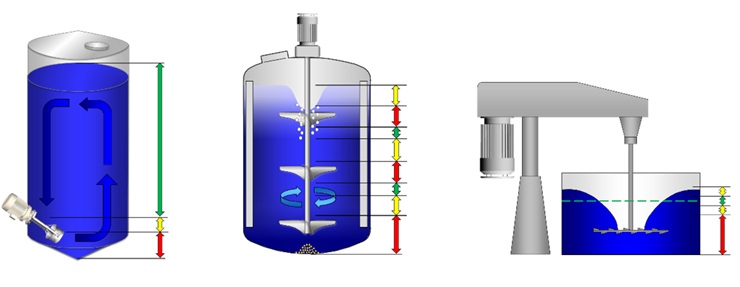
Fig. 1: The fill level range within which a jetstream mixer (left) can be used at full power (see ranges marked in green) is significantly larger than for a conventional agitator or high speed dissolver. Image: ystral
High flexibility and homogeneous mixing results with the jetstream mixer
In comparison, when using state-of-the-art jetstream mixers, the fill level range within which the machine can be used at full power (see green range in Fig. 1) is significantly increased. Process systems with jetstream mixers can be used flexibly. Any batch sizes can be produced in a single process vessel. With this flexibility, there is no need for whole systems of different sizes. Changes of maximum fill levels during one process can also be achieved without problems.
Jetstream mixers combine turbulent micro-mixing in their mixing head with an almost turbulence-free vertical macro-mixing of the entire vessel content. Compared to the use of a conventional agitator, the product is actually fully mixed homogeneously at the end of the mixing process – without unmixed zones and sediments. Jetstream mixers can be installed in the vessel wall from the side, or in the vessel from the bottom or the top (s. Fig. 2).
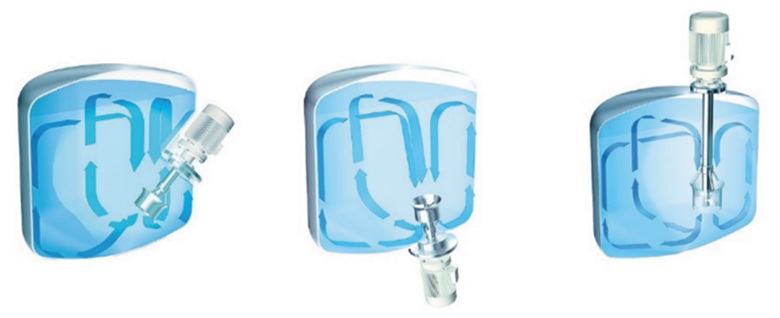
Fig. 2: Jetstream mixers can be installed on the vessel wall, the base or in the vessel cover. Image: ystral
Example: Flexible production of seed and tablet coatings
The demand for variable batch sizes is higher in the production of seed coatings (s. Fig. 3) or tablet coatings (s. Fig. 4) than in many other areas of the coating and inks industry. These products are not optimised for storage. A high degree of flexibility is required for the production of these coatings, as they are directly processed and often very different seeds or tablets are coated. An extremely large range of batch sizes must be covered with just one system.
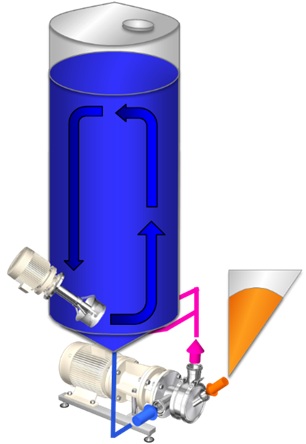
Fig. 3: System concept for the production of seed coatings. Image: ystral
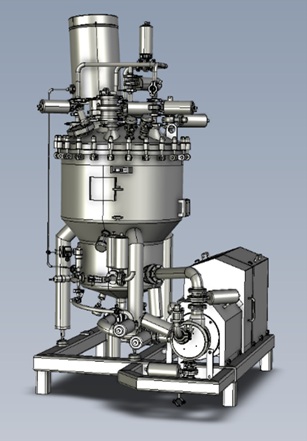
Fig. 4: Process system from ystral for the production of tablet coatings. Image: ystral
For example, the mixing and dispersing technology supplier ystral designed a process system for one user with which any batch sizes between 30 and 900 litres can be produced in one process vessel – so at a ratio of 1:30.
For this purpose, the powder wetting and dispersing machine Conti-TDS is positioned below the process vessel, which is connected to the vessel in the circuit. For smallest batches between 30 and 90 litres, the circulation of the inline disperser is sufficient for homogeneous mixing of the vessel content. The jetstream mixer is used for homogeneous mixing of bigger batches. With the dust-free induction of the powders directly into the liquid, and processing in the closed system, risks of explosions and health hazards for the operator can be ruled out with such a circulation process.
Depending on the application, even smaller batches can be produced with an inline disperser than in the case above with the seed coatings. For example, for a manufacturer of electrically conductive silver-based screen printing ink, ystral has implemented a system with a vessel size of only four litres and a minimum fill level of two litres. There is no upper limit with regard to the batch size. For example, batch sizes of 50,000 litres were realised in the production of flexographic printing inks.
Flexibility through modularisation
If systems have a modular design from the start and are thus not redesigned from scratch, but composed of individual modules according to the modular principle, later process adjustment or capacity increase is easily possible at a later stage. Physical modules, such as Big Bag emptying stations, dosing units, but also control modules can thus be flexibly combined with each other and adapted to requirements or extended. If required, manufacturers can then expand their plant with a second module for example for Big Bag handling, or switch from powder handling with sacks to silos.
In combination with innovative mixing and dispersion technology, this results in a wide range of process options: A powder wetting and dispersing machine operated outside the vessel can be operated on a process vessel inline or in the circuit, and be connected via pipes to several process vessels or storage tanks. In case of low room heights, production processes with two powder vessels and one liquid vessel can be realised (s. Fig. 5).
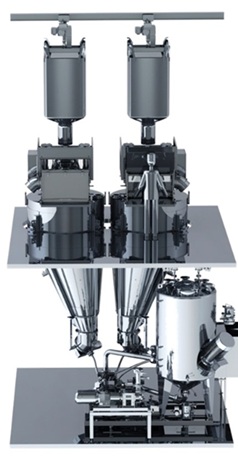
Fig. 5: System with two powder vessels and one process tank. Image: ystral
In case of twin tank plants, an inline disperser is installed between two vessels, which can work with the vessel on the right as well as the left. Liquid dosing, powder infeed systems and control are only required once. Depending on the application, two jetstream mixers can also be installed in one vessel (s. Fig. 6), for example in the production of highly concentrated dispersions for industrial varnishes.
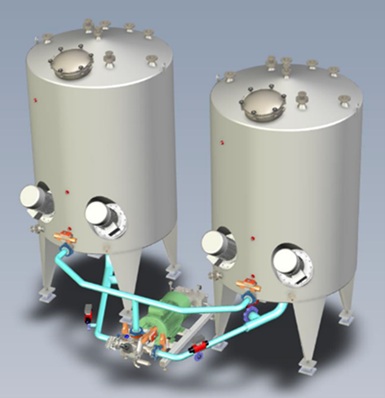
Fig. 6: Process system with one externally operated disperser and two process vessels with two installed jetstream mixers each. Image: ystral
Up to now, in a factory for the production of wood coatings, 20 high speed dissolvers were in use to manufacture 400 different recipes in variable batch sizes. The entire production can be realised on two Conti-TDS twin tank plants from ystral. The process vessels of such a twin tank plant can be of very different sizes – as in this case. This way, a wide range of batch sizes is possible with only one inline disperser, while the time needed for cleaning is minimised simultaneously – because small vessels can be cleaned significantly quicker than large vessels. The manufacturer of wood coatings can produce batch sizes between 100 and 3,000 litres on one twin tank plant. Both plants cover the complete range of recipes and batch sizes, transparent and in colour. None of the 20 high speed dissolvers used so far are needed any longer.
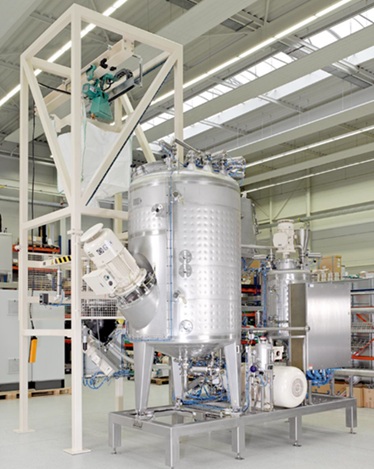
Fig. 7: Flexible twin tank process system for batch sizes between 100 and 3,000 litres. Image: ystral
If the differences between the batch sizes are even larger, or processes with a very large growth in volume are realised, it might be advisable to use three instead of two process vessels of different sizes (s. Fig. 8).
Adding another, very small process vessel to a production plant is often also done for another reason: for the manufacturing of small batches for product development, for testing new ingredients and recipes, for weathering or application tests or for sampling at the customer. Two crucial advantages are used for this: When using the Conti-TDS dispersion technology, the batch size is not relevant for the machine, the powder induction and dispersing machine is installed outside of the process vessel and produces smallest and largest batch sizes with precisely the same efficiency. Furthermore, all preconditions for a safe powder and liquid handling, control and process monitoring in the production plant have already been met.
When such smallest batches are alternatively produced in a lab, this is only possible with compression. Laboratory equipment often uses much smaller tools with different designs, it uses more power and energy in relation to the product volume and often even uses old and less efficient batch technology instead of the inline dispersion process. And of course the possibility to be able to use the existing process system for small trial quantities means crucial time and cost savings.
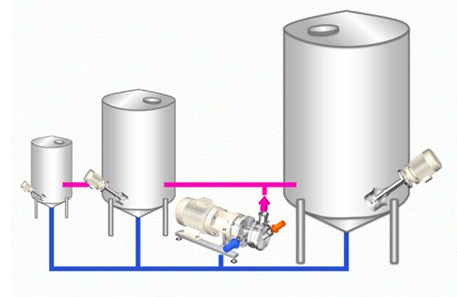
Fig. 8: Process system with inline disperser and three process vessels with jetstream mixers installed therein. Image: ystral
Multipurpose systems in the process vessel
Additional flexibility is enabled through modularisation of the process technology on machine level, for example in the form of multipurpose mixing tools in the process vessel (s. Fig 9). With multipurpose systems, the head of the machine can be replaced, which means different processes and product quantities can be realised with the tool best suited to the relevant purpose. Multipurpose systems from ystral are used for different tasks such as jetstream mixing, mixing and dispersing processes as well as inducting and wetting of powders. This is the best preparation for future changes of the process conditions. Such flexible units, which had so far only been known in the laboratory environment, can be used in process sizes between 5 and 50,000 litres. For smaller machines (up to a size of approx. 7.5 kW), not only the mixing head, but the entire shaft can be replaced here by one employee using a quick coupling.
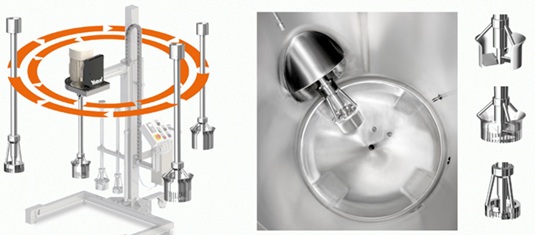
Fig. 9: Multipurpose systems with changeover shafts (left) and replaceable tool heads (right). Image: ystral
Inline machines for flexible use
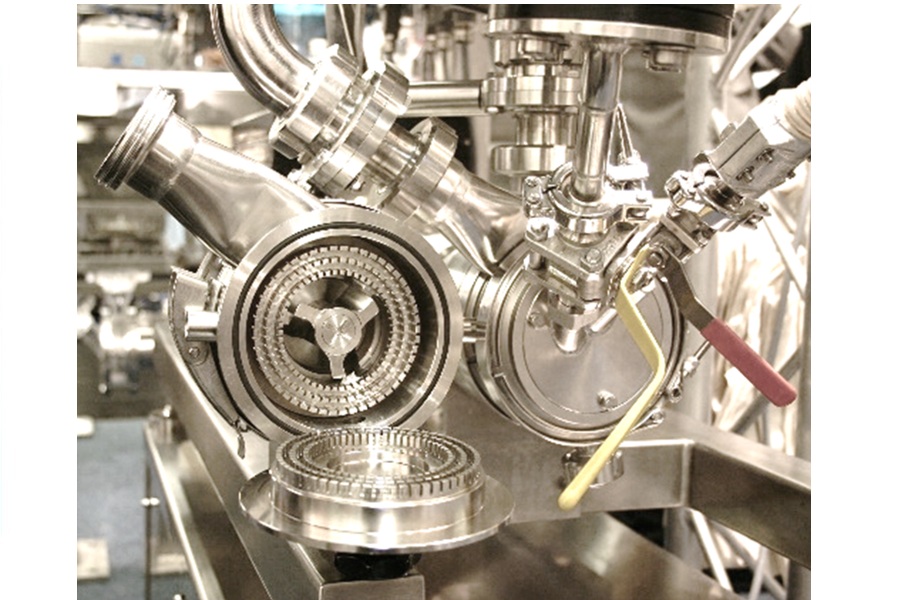
ystral uses easily replaceable conversion sets for inline machines to adapt a universal basic machine to changed requirements, different raw materials and variable tasks. These consist of few parts, can be easily replaced, and in addition to the dispersing tools with different geometries, they also include the powder and liquid connections, sensors and accessories tailored to the task. For instance, the Conti-TDS is not limited to a specific individual process for which the machine was originally procured, but can be easily adapted to new requirements by replacing the tool head – for example to the processing of extremely sticky or thickening powders, to the processing of media that are shear-sensitive and must therefore be mixed with great care and not dispersed at all, up to the processing of products that require particularly intensive dispersing. The machine can be converted from a powder induction machine to an inline dispersing machine with up to six different tool collars lying inside each other (s. Fig. 10). For the user, such a modularisation of the process technology up to machine level means security of investment, as with a changed or completely new process, it is not the whole machine, but only individual tools that must be replaced.
For internationally operating companies, variability in precisely reverse direction is required. The same tools and processes are used everywhere to ensure the same product quality worldwide. However, there are different standards for the electrical equipment, particularly for motors and the non-uniform standards for explosion protection. Therefore, identical tools are combined with country-specific basic machines. This can also be realised for a modular, flexible machine design.
Flexibility is often essential for producers’ survival
There are applications where product changes almost never happen. This is the case for the manufacturing of mass products such as printing inks, corrosion protection primers or paper coatings. Due to the very low number of product versions, flexibility is not really relevant at all, however, the modular concept provides an advantage here also. Having said this, for most varnishes, paints and other coatings, a flexible, easily scalable production is vital for today’s manufacturers, particularly where new products are being developed or products are manufactured customised to order with a large range of recipes and batch sizes. The solution for this is a flexible modularised manufacturing technology and an innovative technology, which is adaptable and safe – not only today, but also in future.
 Print this article
For more information, please contact:
Thibault Weinert
ystral gmbh maschinenbau + processtechnik
Wettelbrunner Strasse 7
Ballrechten-Dottingen
Landkreis Breisgau-Hochschwarzwald
79282
Germany
Tel: 0049 7634 5603 900
Email: ystral@ystral.com
Web: https://ystral.com
Share article:
Process and Control Today are not responsible for the content of submitted or externally produced articles and images. Click here to email us about any errors or omissions contained within this article.